Safety / News
A Starship delivery robot ran a red light in Tallinn and up to nine bus passengers were hurt
At the end of October 2026 a six-wheeled Starship Technologies delivery robot entered an intersection in Tallinn against a red signal during rush hour. A city bus braked hard to avoid it, standing passengers fell, and Tallinn's transport operator TLT said up to nine people were injured. The robot was knocked across the street and then carried on with its delivery.
At a glance · reported claims
Up to 9
Bus passengers injured, per Tallinn operator TLT
4,000+
Times Starship robots had crossed this intersection before
11M
Autonomous deliveries Starship reports in seven countries
2020
Year of the previous reported bus collision with a delivery robot in Estonia
What happened
According to Estonian public broadcaster ERR, the robot entered the intersection on red, which TLT, the bus driver and other road users confirmed. The driver braked to avoid hitting it, standing passengers fell, and the robot still struck the front of the bus and was thrown across the street.
The robot then continued its route. TLT board member Andrei Novikov said it had fled the scene, if you can put it that way, and a TLT official added that leaving an accident without meeting legal obligations may constitute an offence. The sources do not say how serious the injuries were.
What Starship says
Starship's head of operations Pepe Aaviksoo confirmed the company knew of the incident, had contacted police and had opened an internal investigation. He said bright advertising boards and traffic lights confused the robot's sensors, that exceptional situations do occur and that there are many lessons to learn.
The company stresses that such cases are rare: its robots had crossed this intersection more than 4,000 times, and Starship operates in seven countries with 11 million autonomous deliveries and 24 million km driven. The previous reported bus collision with a delivery robot in Estonia was in April 2020.
What it means for robots in public spaces
The impact itself was minor; people were hurt because the bus braked hard. That detail matters: a robot of about 35 kg is dangerous less for what it hits than for the sharp reactions it forces on others. For street robots, reading the traffic light is not enough; they also need to know when to be unsure and stop.
The second problem is behaviour after the crash. The robot kept going, while a human driver would have to stay. For companies putting robots on city streets this is a matter of procedure: the robot must be able to stop after a collision and call an operator, and the operator needs a clear protocol.
If you are considering robot delivery or patrol robots for your site, ask the vendor how the robot behaves when it is unsure about a signal, what happens after a collision and who deals with the police and the insurer. Those are questions for the contract as much as for the technology.
Robots in this story
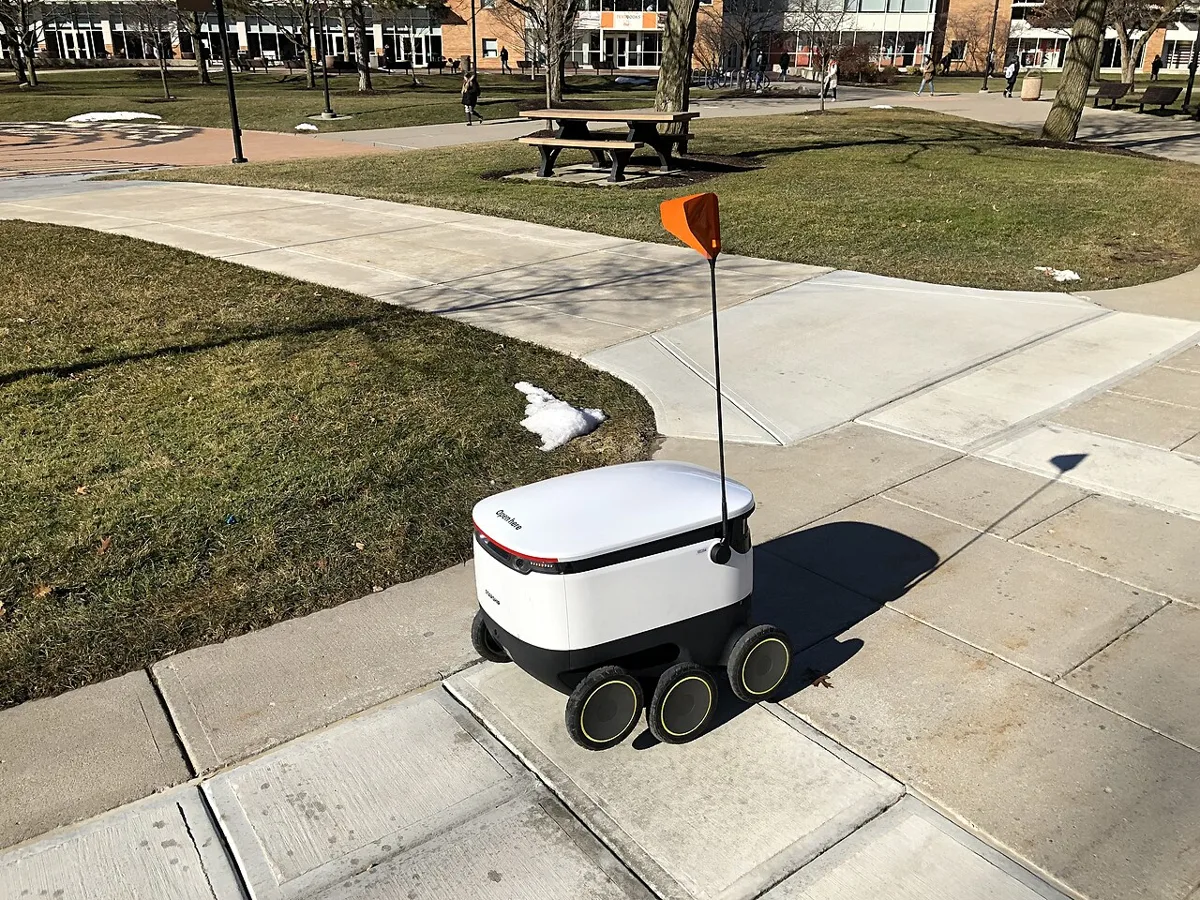 Estonia
Sidewalk delivery robot
Sidewalk delivery robot
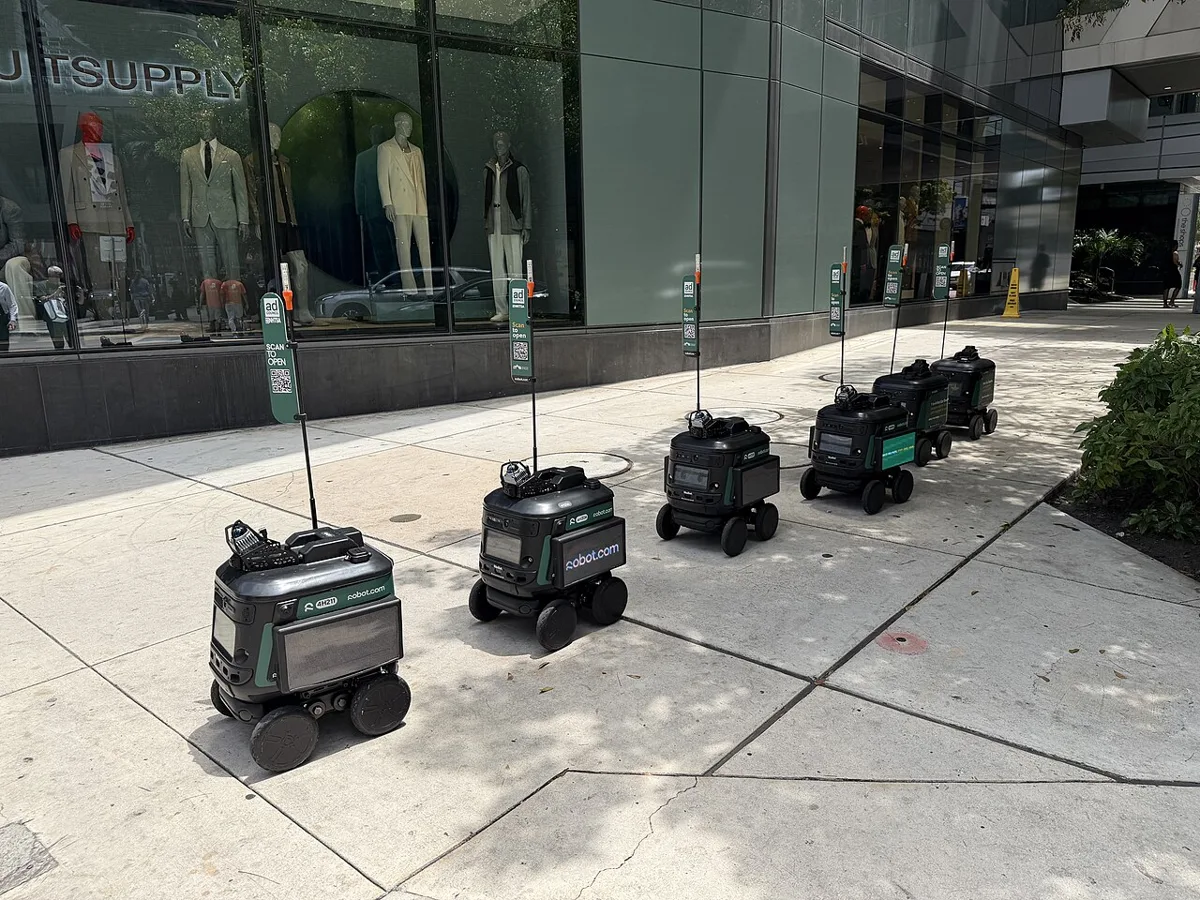 USA
Sidewalk food-delivery robot
Indoor/outdoor delivery robot
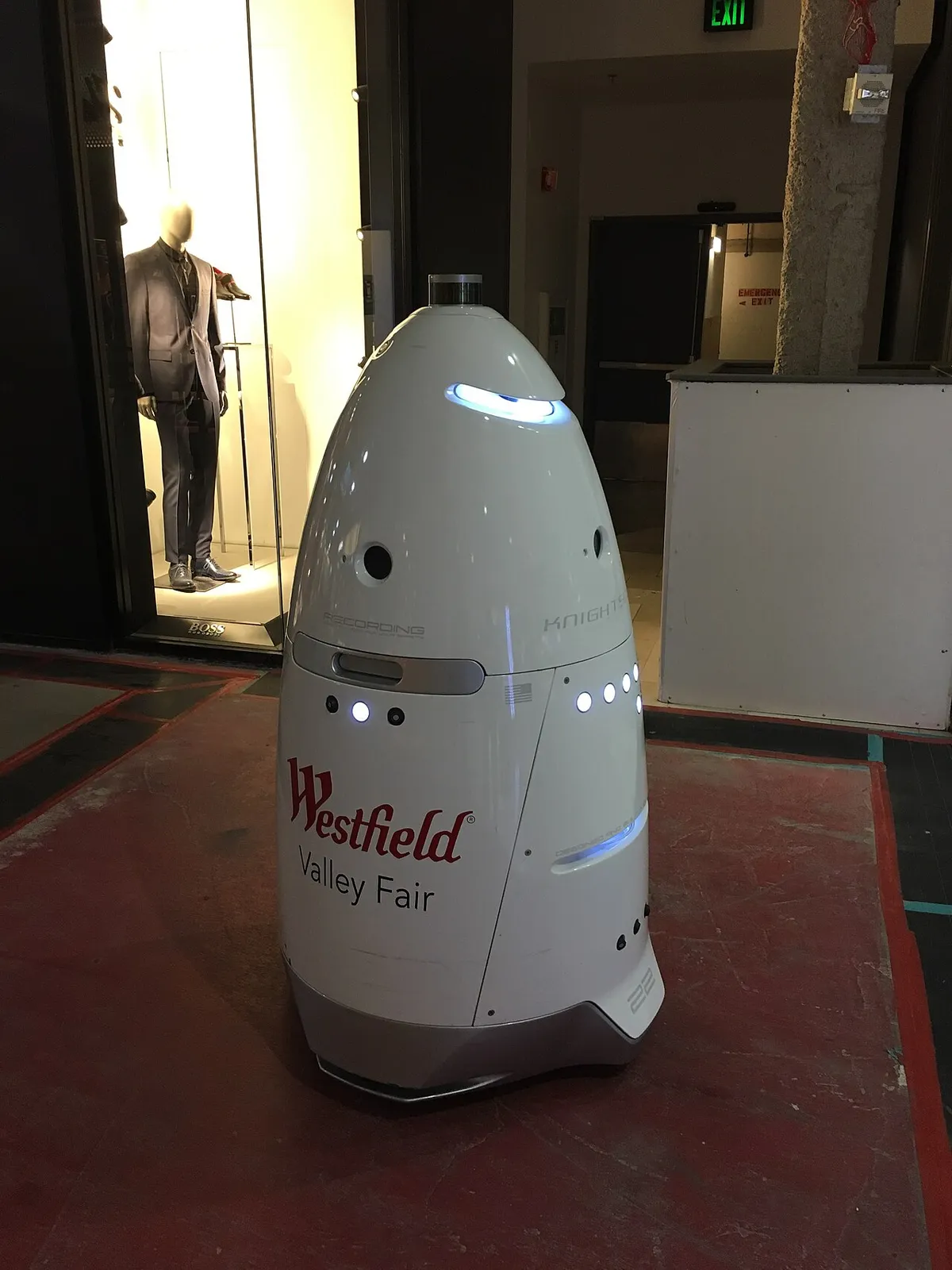 USA
Wheeled patrol robot
Sources & editorial note
- Vision Mobility · Estonia: Starship delivery robot collides with a bus and flees the scene · 29 October 2026
- Futurism · Delivery robot causes accident injuring nine in Estonia · 6 November 2026
- Wevolver · Starship robot specifications
An original RoboHub summary and analysis based on the sources listed above. Figures and plans are attributed to the companies and media that published them; RoboHub has not independently tested the robots. This is not a sponsored article.